
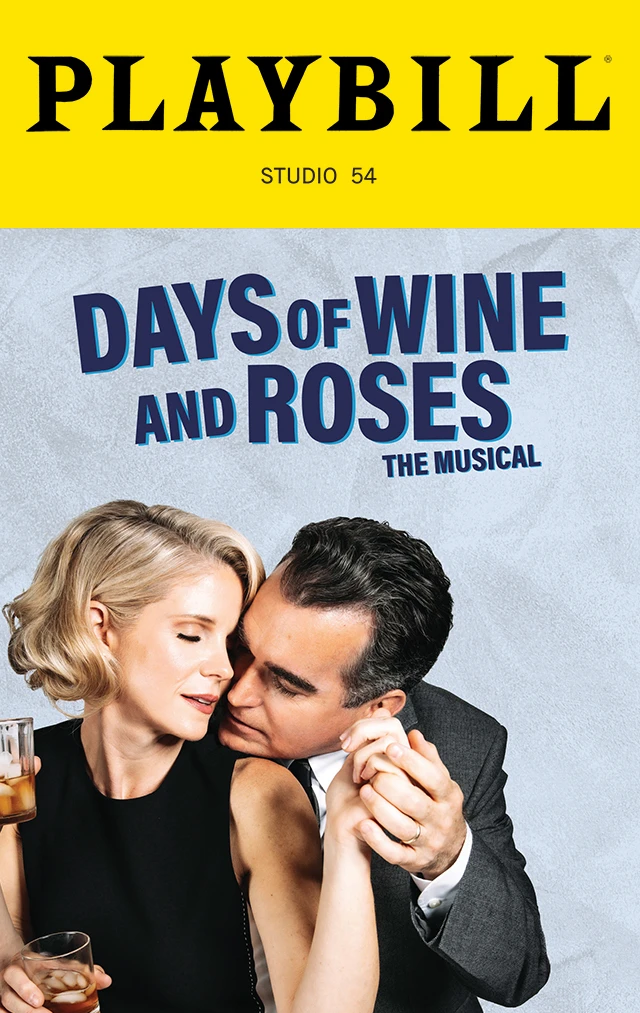
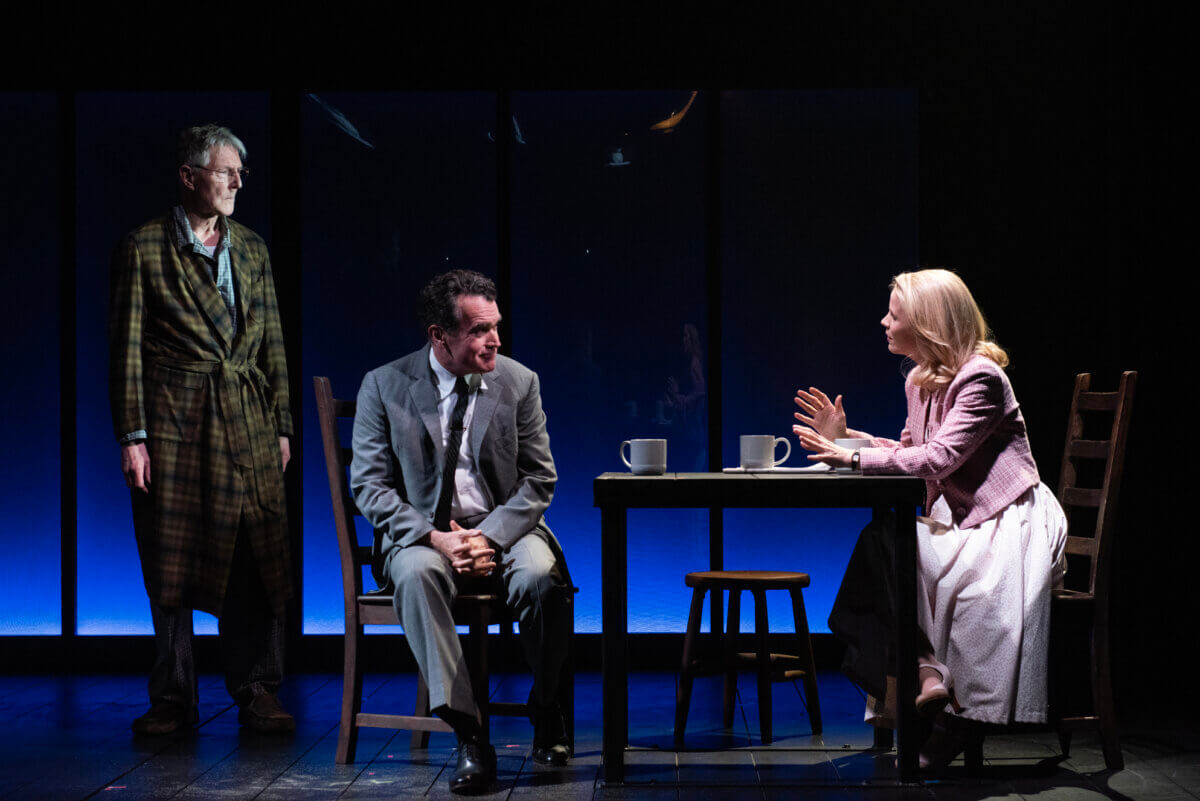
Synopsis
Days of Wine and Roses is a poignant musical set in 1950s New York, following a couple whose love and ambition are tested by the grip of addiction. With music (combining lyrical ballads with jazz-inflected melodies) and lyrics by Adam Guettel and a book by Craig Lucas, it’s a moving story of passion, loss and hope.
Reviews
“For all the glossy come-hither of Michael Greif’s tone-perfect production … not for an instant does it glamorize the boozing itself. And yet we can sense the allure: how alcohol might become the one true thing that matters, smoldering wreckage be damned.”
The New York Times / Archive
“Somehow, despite its somber theme, Days of Wine and Roses is sumptuous from start to finish, a resplendent melding of music and acting and storytelling that dares us to confront lessons we only thought we learned ages ago.”
Deadline
“Depressing and harrowing as it is, it’s not the kind of show we often get around these parts. Its success would signal that there is indeed still an audience for weird art amid the singing lions and flying witches. That would be the most hopeful takeaway of all.”
Theatremania
“If Days and Wine and Roses isn’t exactly galvanizing—it’s too classy for that—it is effectively sober. After seeing it you might need a drink, or might never want one again.”
Time Out
Playbill’s My Life in the Theatre
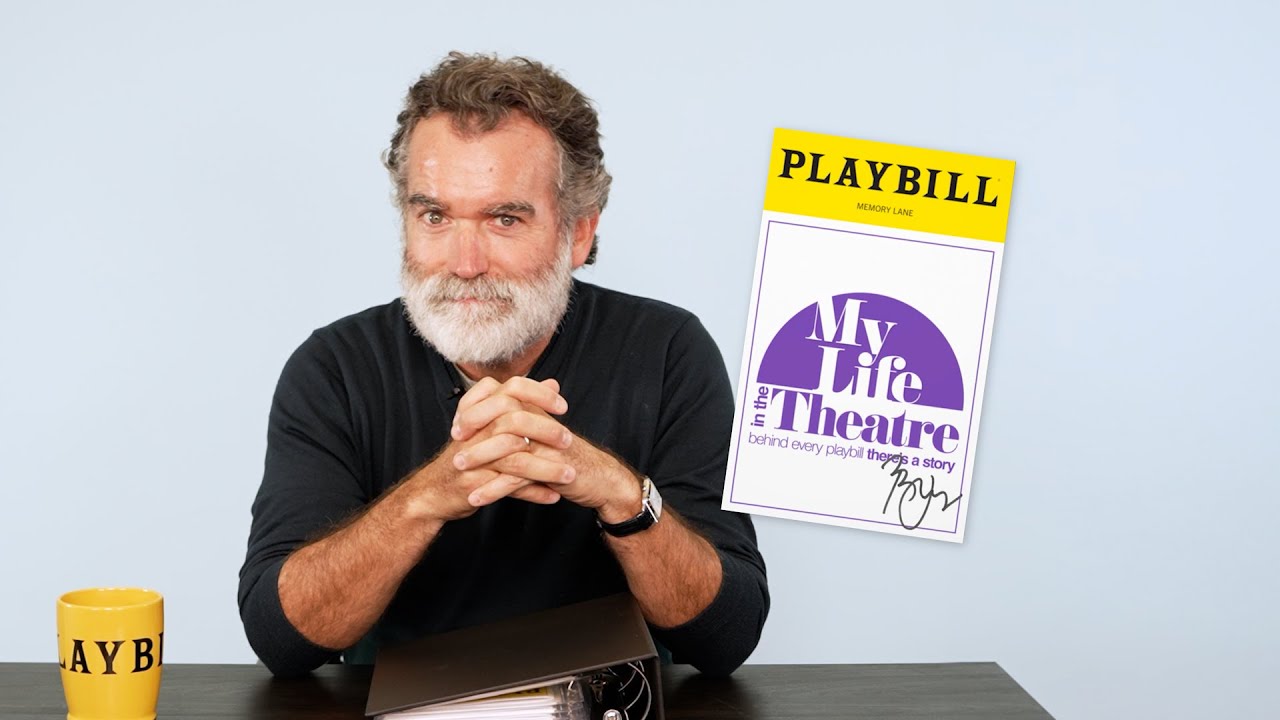
On 2 December 2025 Playbill released an interview with Brian on Youtube under their My Life in the Theatre playlist. Below is a transcript from the video about his time with Days of Wine and Roses – you can watch it here.
“This, to me, represents, uh, it’s fitting that it’s that it’s near the end, because obviously it’s one of the last things I’ve done, but it is, I think, a culmination of of things for me that I want to be in the theatre, which is challenged. I want to be challenged. I wanna be asked to do things that I don’t know if I can do. And, uh, I’m lucky that Adam Guettel and Michael Greif, and Craig Lucas, said, yeah, we think you can do this, because I’ve never experienced something where I had more reverence for the thing itself and wanting to get the character, right, the storytelling, right, the idea of the story, what the story means, not only to the characters, but to the world large, the idea of addiction, depicting someone in the throes of addiction, in this case, alcoholism, understanding that, and wanting to represent that all was a very serious endeavour.
And then to do it in a way that required singing and acting. Um, I guess that’s why I say it represents a bit of a culmination of what, what I always dreamed that I could be asked to do. And then to do it with Kelli O’Hara as a, you know, hand in hand with somebody jumping out of an airplane is really just a treasured experience for me because of the trust. And what we had to do every single night to kind of make this show, to pull it off in a way that hopefully was, you know, compelling and empathetic and damning and all the things that it required it to be.
It was a tall order. And I was talking earlier about composers and how, um, sometimes you instinctively understand the DNA of a composer how they how they write and how they think. Adam has this way of operating, Adam Guettel has a way of writing music that is seemingly, for me, I can’t grasp it at first, but once I take time to figure out with him, you know, at my side and through tutelage and through exploration and studying and doing of it, you realise that his music is operating at a whole different level. And so I feel like I was made better by virtue of that pursuit. I can’t say that I always succeeded, but I’m really proud of what I did. I’m not saying I failed, but I always felt like there was, I always aspired to getting to the place where… Adam writes, like, like, designers create cathedrals in my mind. And I always wanted to kind of be able to kind of sing it properly. But Adam would, Adam Guettel would be the first person to say, doesn’t necessarily matter how it sounds, if the person isn’t alive, who’s, who’s, if the character isn’t alive, if the character isn’t real.
So this show was such a great combination of musical execution, and also an execution of a real lived experience, in the case of Joe Clay, my character. Again, just to wrap it up, going back to Kelli. She’s the reason it happened. She basically, um, actually, going back to Sweet Smell of Success, after we worked together, she wanted to work together again with me, and she started working with Adam Guettel on Light in the Piazza, and she said, hey, I’ve got this crazy idea of turning Days of Wine and Roses, the movie, into a musical. This was 20 years ago, maybe? And we’ve done iterations along the way. The fact that any show happens is miraculous, but this one, in particular, is a miracle, because I kind of feel like if I had to close this book and say, hey, that’s my life in the theatre, I’d be I’d be so satisfied with that being the last thing I talked about, because I feel like that is a, um, that is a flag in the mountaintop saying, yeah, I was here. I was here.”